
Continuing northwest to Montana, Glacier National Park offers rugged peaks, turquoise lakes, and some of the most scenic roads in America. “I would start in Glacier and work my way south, because I hate the heat,” Walton advised. Staying inside the park adds both convenience and immersion. “The biggest thing with the Xanterra properties in Glacier is you can stay inside the park,” he said. “The Lake McDonald Lodge is a great option.”
Visitors can explore historic lodges, hike hidden trails, drive the Going-to-the-Sun Road, or join the famed red bus tours.
BY TAYLOR OWENS
Imagine setting out on the ultimate American road trip, weaving through the nation’s most iconic landscapes while staying in historic lodges and experiencing adventures that linger long after you return home. With Xanterra, this journey is guided by decades of experience managing national park lodges, luxury resorts, and unique adventures from Glacier to the Grand Canyon, Death Valley to Windstar Cruises.
"You know, that’s a great question,” Todd Walton, director of marketing and sales at Yellowstone National Park Lodges, said when asked how someone might begin the perfect Xanterra adventure. “I mean, I hate to say that it depends on where I’m coming from. Denver is a great option.”
From there, the road unfolds, revealing both the grandeur of nature and the thoughtful hospitality that Xanterra provides along the way.
Rocky Mountain National Park and Mount Rushmore
Starting in the northern Rockies, travelers could find themselves among the alpine meadows and towering peaks of Rocky Mountain National Park, where elk wander freely and wildflowers bloom in vivid bursts. “We operate the facilities at Rocky Mountain National Park and Mount Rushmore,” Walton said. “You know, we’re going to make sure that people come in and have a great experience while they’re visiting the national parks.”
Rocky Mountain National Park greets travelers with sweeping alpine vistas and the iconic Trail Ridge Road, the nation’s highest paved highway. Visiting Trail Ridge Store & Café, a Xanterra-managed facility, puts you right in the heart of the park.
A short drive brings you to Mount Rushmore, where the colossal faces carved into the Black Hills offer a striking mix of history and natural beauty. Visiting Xanterra’s facilities ensures comfort and convenience while placing visitors amongst these iconic landscapes. Visitors can enjoy a meal at Carver’s Café, which offers locally sourced dishes, including bison burgers and Teddy’s bison chili, and is on track to become the first four-star Certified Green Restaurant in South Dakota and the entire national park system. For a sweet treat, the Memorial Team Ice Cream station serves TJ’s vanilla ice cream, based on Thomas Jefferson’s 1780 recipe.
Travel Tips
- Stop in Estes Park for coffee or breakfast before entering Rocky Mountain
- Stretch your legs at the Beaver Meadows Visitor Center to grab a map.
- Scenic detour: Drive Trail Ridge Road in Rocky Mountain for stunning alpine views.
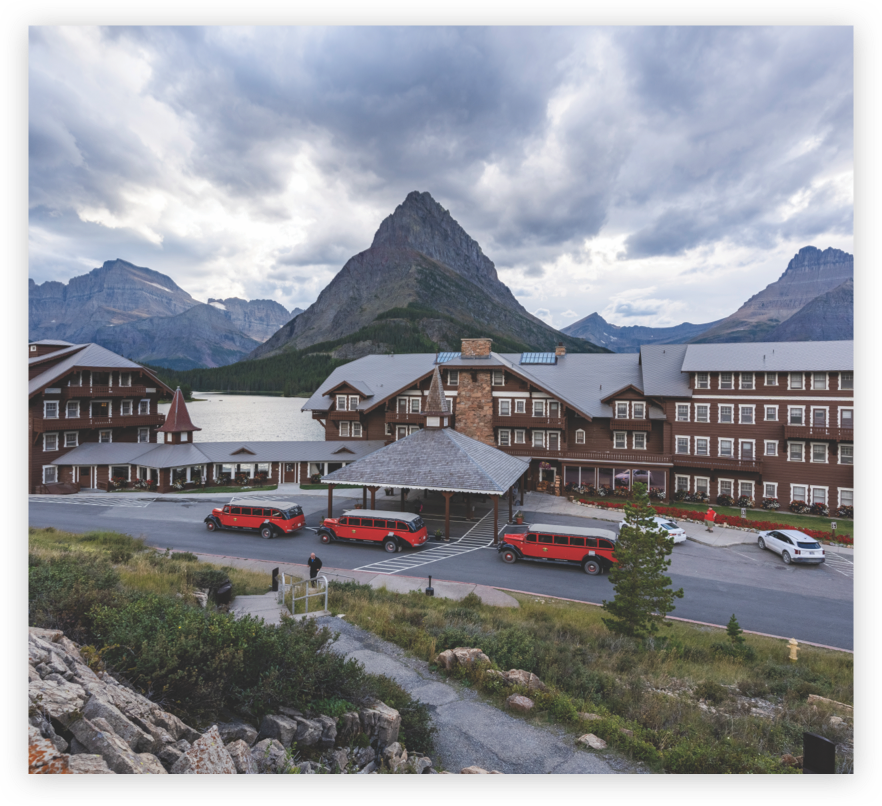
Many Glacier Hotel exterior. PHOTO COURTESY OF XANTERRA TRAVEL COLLECTION
Glacier National Park
Travel Tips
- Stop in Bozeman or Billings for coffee or a light snack en route.
- Drive Going-to-the-Sun Road early to avoid crowds and catch
wildlife sightings. - Reserve red bus tours ahead of time—they fill up fast during peak season.
Yellowstone National Park
Heading northwest, the road leads to Yellowstone, the world’s first national park. Here, the wildlife is as mesmerizing as the geothermal wonders. “Yellowstone is one of those places where you walk out and Old Faithful is going off, or you see a bison walk by, and you go, ‘I’ve never seen anything like this in my life.’” Walton said. “That’s what makes it so special.”
At Yellowstone, Xanterra isn’t just about lodging—it’s about full access to the park’s magic. With nine lodging options, four campgrounds, and one RV park, choosing where to stay becomes a meaningful part of the journey. From the iconic Old Faithful Inn and its rustic log-and-stone architecture to the peaceful lakeside ambiance at Lake Yellowstone Hotel & Cabins, each place reflects Yellowstone’s wild character. You’ll find that Yellowstone National Park Lodges arranges guided tours, interpretive programs, and in-park transportation so visitors don’t just see the geysers and wildlife—they experience them.
“What we’re really trying to do here is connect people to the park in a meaningful way,” Walton said. “Whether that’s through our lodges, our tours, or just being able to step outside and watch Old Faithful erupt—it’s about creating those moments you’ll never forget.”
At Yellowstone, Xanterra isn’t just about lodging—it’s about full access to the park’s magic. With nine lodging options, four campgrounds, and one RV park, choosing where to stay becomes a meaningful part of the journey. From the iconic Old Faithful Inn and its rustic log-and-stone architecture to the peaceful lakeside ambiance at Lake Yellowstone Hotel & Cabins, each place reflects Yellowstone’s wild character. You’ll find that Yellowstone National Park Lodges arranges guided tours, interpretive programs, and in-park transportation so visitors don’t just see the geysers and wildlife—they experience them.
“What we’re really trying to do here is connect people to the park in a meaningful way,” Walton said. “Whether that’s through our lodges, our tours, or just being able to step outside and watch Old Faithful erupt—it’s about creating those moments you’ll never forget.”
Travel Tips
- Stock up on coffee and snacks in Bozeman, Livingston, or Jackson Hole before heading into Yellowstone.
- Book lodging early at Old Faithful Inn or Lake Yellowstone Hotel & Cabins to secure prime locations.
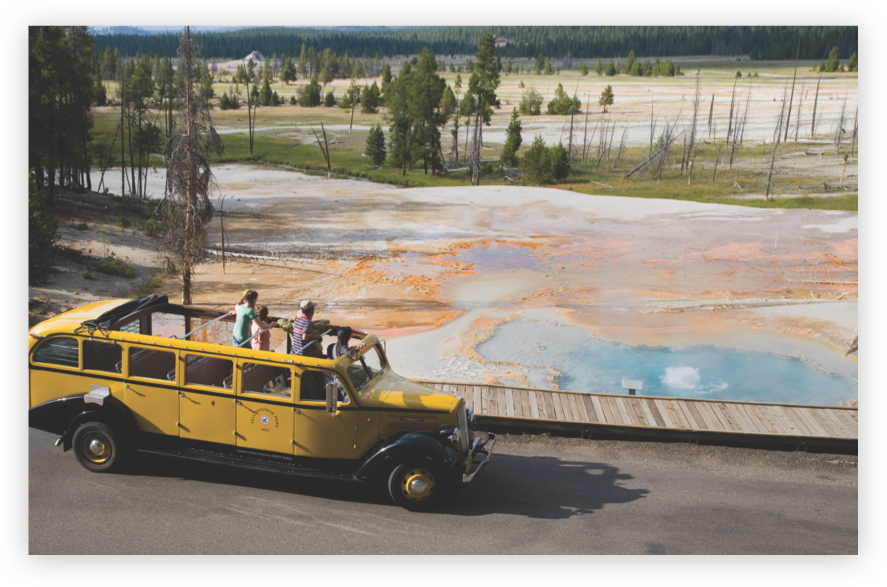
Historic Yellowstone bus tour stopped at a hot spring. PHOTO COURTESY OF XANTERRA TRAVEL COLLECTION
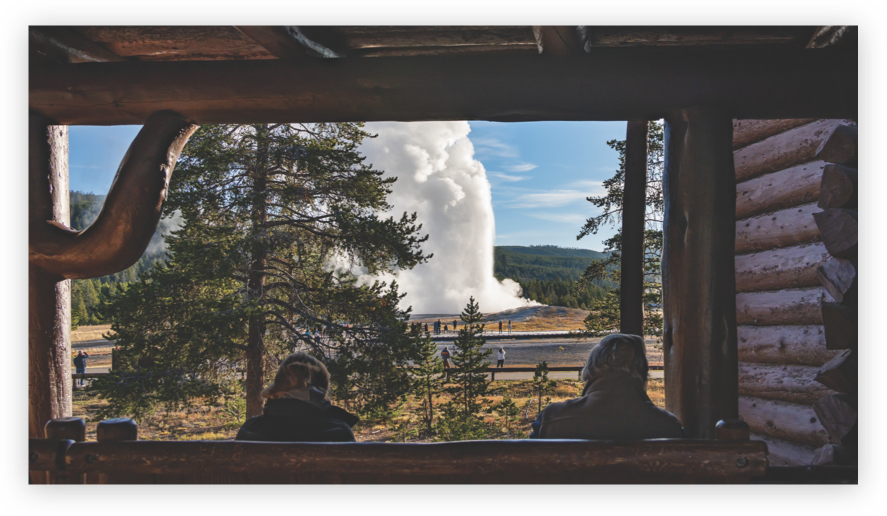
The view of Old Faithful from Old Faithful Inn. PHOTO COURTESY OF XANTERRA TRAVEL COLLECTION
Grand Canyon and Death Valley
As the journey moves southwest, the Grand Canyon awaits. Start in Williams, Arizona, a quintessential Route 66 town, where the Grand Canyon Railway offers an unforgettable train ride to the South Rim. Jim Stellmack, Regional director of marketing and sales at Grand Canyon Railway and Hotel, explained: “As you’re coming into the area, the southwest area, one of the really cool opportunities that the Xanterra Travel Collection has to offer in the town of Williams… we actually operate the Grand Canyon Railway and Hotel. If the guest chose to stay here in Williams, they could actually get on our train, and the train takes you up to the South Rim.”
“The cool thing is that the train ride itself is part of the adventure,” Stellmack said. “You have musicians, you have cowboys on board, and then we even stage a train robbery on the way back.”
Once at the South Rim, you can take in stunning vistas, enjoy dining at El Tovar, or explore Native American culture at the visitor center. Stellmack noted, “You know, the mule rides are not as well known, where you can hop on a mule and go down to Havasupai Gardens or some areas down below the rim. We jokingly say ‘walking down into the canyon is optional, coming out is mandatory.’”
From the Grand Canyon, Death Valley National Park offers a stark but captivating contrast. The Oasis at Death Valley, composed of The Inn and The Ranch, blends history, luxury, and adventure in the desert. The Inn, a Four-Diamond resort since 1927, offers restored historic charm, private casitas, lush gardens, and a serene spring-fed pool, while The Ranch provides a family-friendly vibe with spacious rooms, a natural spring-fed pool, an 18-hole golf course—the lowest in the world—and a lively town square. Both properties offer unique dining, stargazing, and easy access to the park’s iconic landscapes, creating the perfect blend of relaxation and exploration.
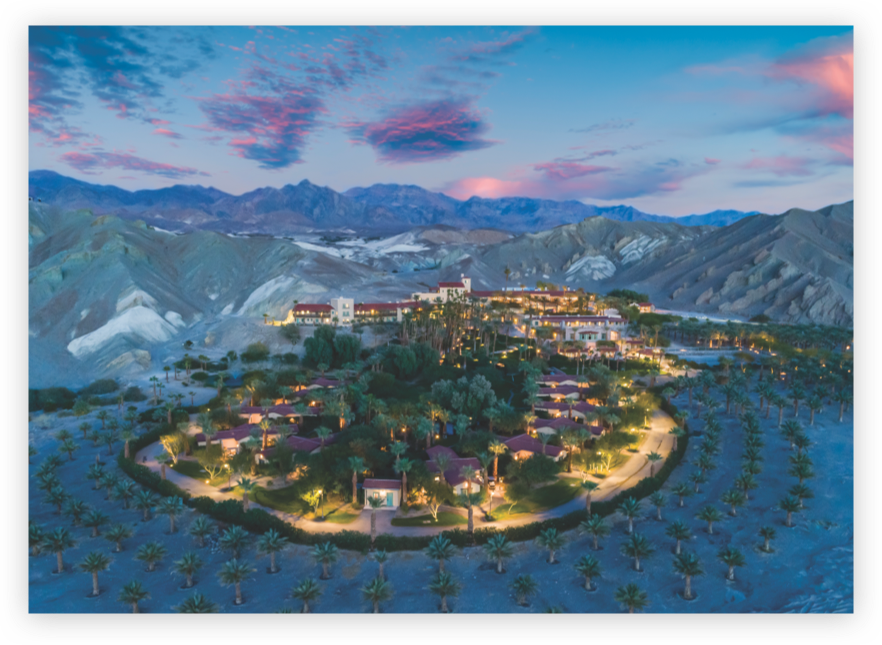
Aerial photo of Oasis Inn at Death Valley with a pink sky. PHOTO COURTESY OF XANTERRA TRAVEL COLLECTION
“Most people don’t think about Death Valley as being so beautiful,” Walton said. “But because of the dark sky factor and because of the wildflower factor in the springtime, it’s a place that surprises people because it’s so lush in the middle of the desert.” The Oasis provides options for camping, golf, spa, and fine dining, making the desert a luxurious retreat.
Travel Tips
- Stop in Route 66 town of Williams, Arizona, for a quick photo and snack.
- Bring plenty of water and sunscreen for the train ride and canyon exploration.
- Optional detour: Las Vegas or Beatty for last-minute supplies before entering Death Valley.
- Plan desert visits in spring or fall to avoid extreme summer heat.
Sea Island, The Broadmoor, and Beyond
Beyond the national parks, Xanterra’s collection spans luxurious resorts such as Sea Island in Georgia and The Broadmoor in Colorado. Golf, spa treatments, and historic architecture combine with outdoor adventure to create experiences that are as indulgent as they are inspiring.
Travel Tips
- Book spa treatments and golf tee times in advance.
- Look for scenic overlooks or local attractions near the resorts.
VBT Bicycle Tours
For travelers seeking movement and exploration, Vermont Bicycle Tours (VBT) offers guided road and gravel bike tours across several continents. “The Vermont Bicycle Tours programs that we have are fantastic,” Walton said. “If you wanted to do gravel grinds or you wanted to do long days and explore different areas, they offer a lot of stuff in the Western U.S. and beyond.” Tour locations vary from Colorado, Utah, South Africa, New Zealand, Iceland, Slovakia, Canada, Chile, and many more.
Travel Tips
- Choose tours based on fitness and terrain preference (road vs. gravel).
- Plan for luggage transport if doing multi-day rides.
Windstar Cruises
Finally, the adventure can extend to the seas with Windstar Cruises, where small-ship sailboats deliver intimate, all-inclusive experiences. “That’s the nice thing about the Windstar Cruises is that it’s totally an elevated experience,” Walton said. “You have a truly elevated cruise experience because it’s all inclusive. It’s very high touch, and you have really excellent customer service.”
Travel Tips
- Arrive at ports early for the best embarkation experience.
- Consider a pre-cruise hotel stay to adjust for travel time.
From the northern Rockies to the southern deserts, from historic lodges to luxury cruises, a Xanterra journey blends comfort, adventure, and truly unique experiences. “Not to blow smoke, but it’s true… whether it’s Windstar, Vermont Bike Tours, Country Walkers, the Oasis at Death Valley, Grand Canyon,” Walton said. “You name it, it’s legendary hospitality with a softer footprint. It really is that we walk the walk and talk the talk.”
“A road trip is so much more than just jumping in the car and going and sleeping,” Walton said. “It’s everything that allows you to disconnect with one facet of your life and connect with the land and the open skies and just experiencing what’s out there.”