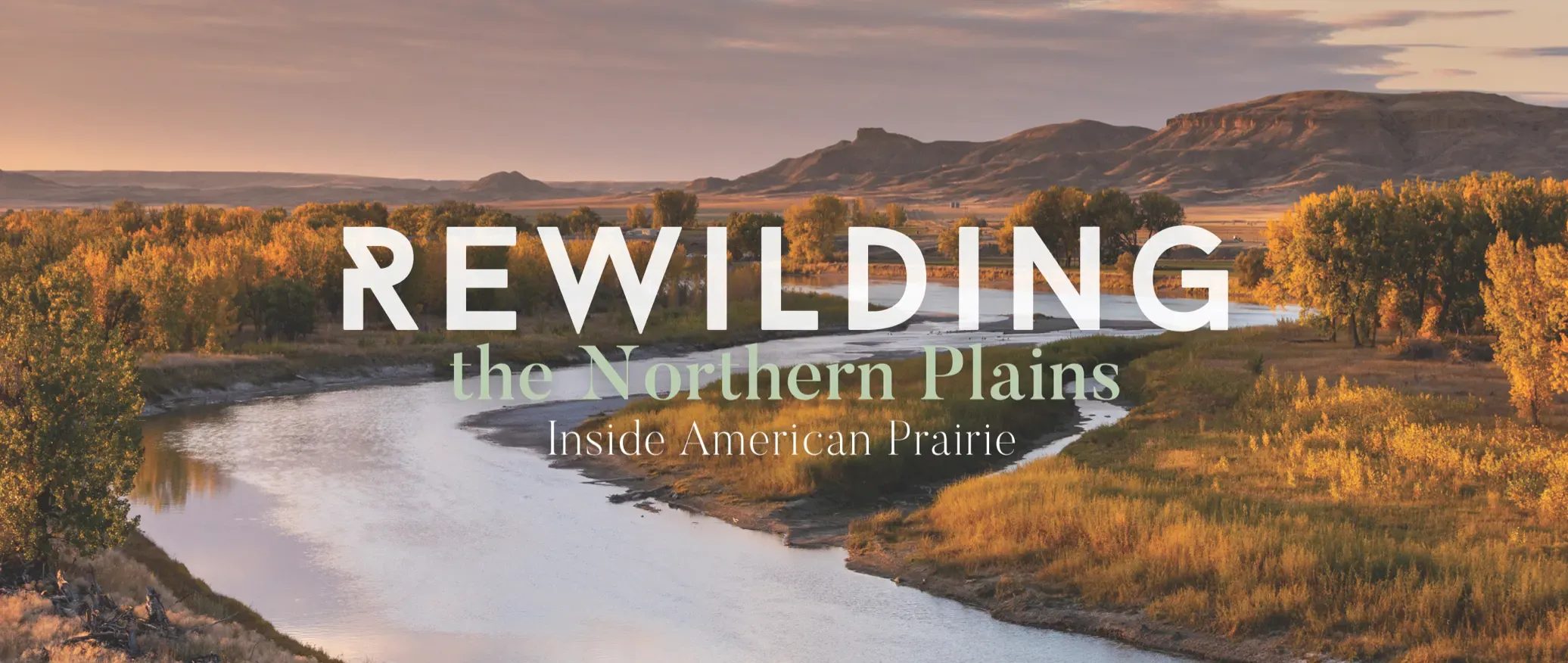

When people think about Montana,” Beth Saboe asks me, rhetorically, “where do you think they think of?”
A list tumbled out of our mouths in unison: the sweeping mountains of Glacier, the grand wildness of Yellowstone, the calm curves of the Madison River, the cities of Bozeman and Missoula nestled into rugged, forested valleys.
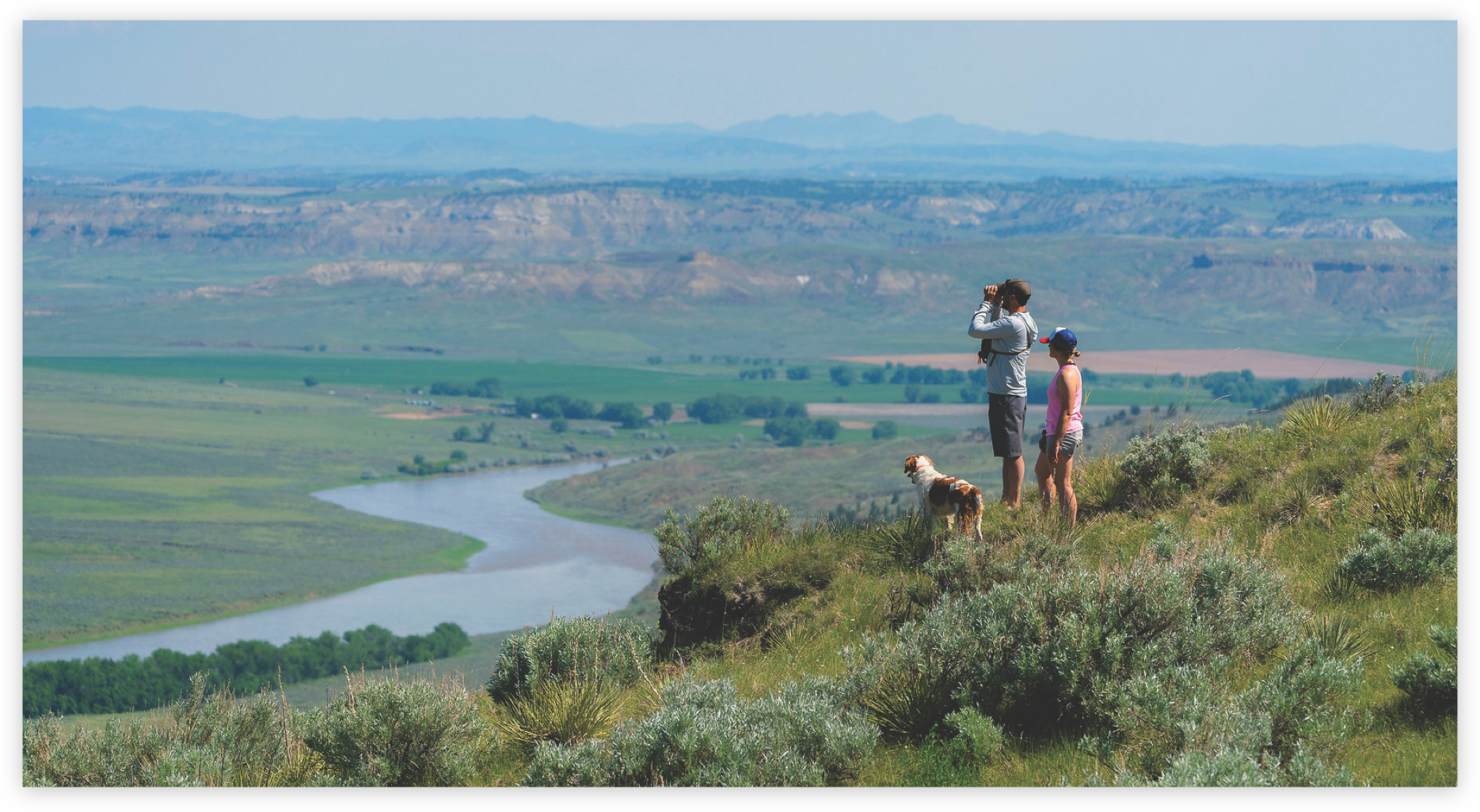
Arguably, however, somewhere else in the state is where Montana truly gets its moniker, “The Big Sky State,” she says. And that place is the prairie, or the Northern Great Plains, that stretches across the eastern two-thirds of the state.
Saboe grew up in eastern Montana herself, and “I can tell you that a sunrise or a sunset on the prairie is something spectacular and to be witnessed.”
That sentiment is part of a three-pronged approach of American Prairie, where Saboe serves as the senior public relations manager. American Prairie, founded in 2004, is a nonprofit conservation organization dedicated to assembling one of the largest contiguous nature reserves in the United States. Within that reserve would lie Montana’s temperate grasslands — an ecosystem that, when healthy and intact, is rich with biodiversity, pristine wildlife habitat, and upholds our nation’s history.
American Prairie has adopted a unique conservation model, according to Saboe, weaving together land ownership to amass an eventual 3.2 million acres to manage for the benefit of wildlife and the public. (Years ago, conservation biologists determined 3.2 million acres, or 5,000 square miles of continuous land, was the amount needed to ensure the survival of a thriving, sustaining prairie ecosystem.)
By Claire Cella
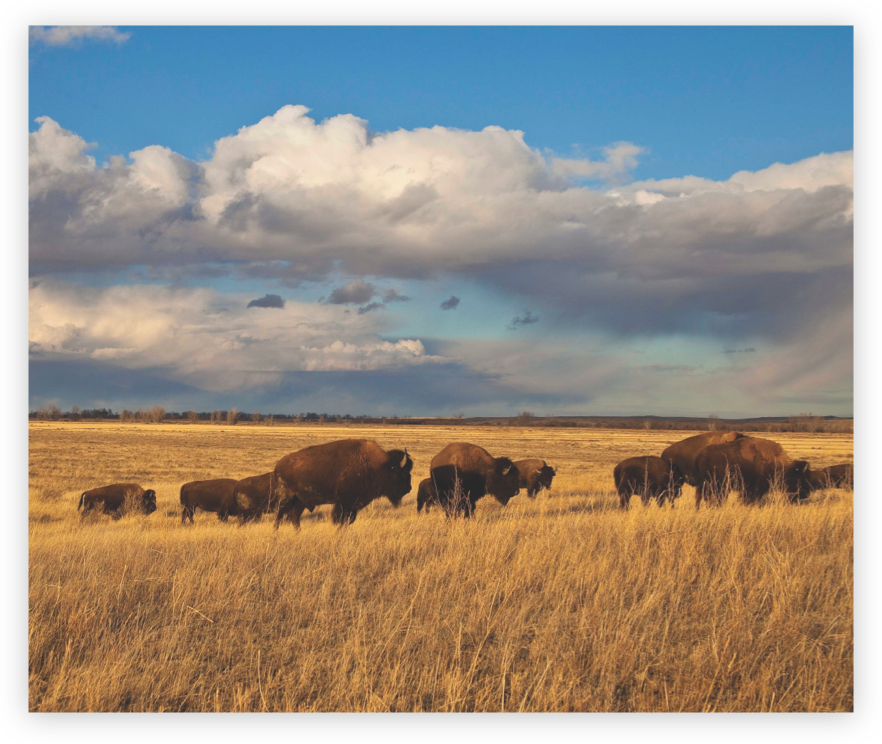
To stitch together this patchwork of land, American Prairie buys private or deeded land to connect to existing public lands. Already, their reserve includes the Charles M. Russell National Wildlife Refuge, owned by the U.S. Fish and Wildlife Service, and the Upper Missouri River Breaks National Monument, owned by the Bureau of Land Management, which together encompass nearly 1.3 million acres. Since 2004, American Prairie has grown its own habitat base to a total of 603,657 acres — 167,070 of which are deeded and 436,587 of which are leased public lands.
Once land is under American Prairie ownership, Saboe says, the organization moves to the other two prongs of its mission beyond land: wildlife and people. Restoring biodiversity and health to properties—what they call “rewilding”—as well as opening up access to the public, is high among their initial priorities. For example, their most recent acquisition in September 2025 — the Anchor Ranch in Blaine County, southwest of Havre, Montana — will be managed as critical wildlife habitat and will open up nearly 50,000 acres for public access.
Once land is under American Prairie ownership, Saboe says, the organization moves to the other two prongs of its mission beyond land: wildlife and people. Restoring biodiversity and health to properties—what they call “rewilding”—as well as opening up access to the public, is high among their initial priorities. For example, their most recent acquisition in September 2025 — the Anchor Ranch in Blaine County, southwest of Havre, Montana — will be managed as critical wildlife habitat and will open up nearly 50,000 acres for public access.
Under their rewilding efforts, the organization’s team of specialists works to ensure that native vegetation and wildlife species — ranging from bison to black-footed ferrets to grassland birds — are present, as they would be in any resilient, diverse ecosystem. They undertake fencing projects to allow wildlife unencumbered movement through the vast landscape and manage hunter programs to maintain robust populations of elk, pronghorn, mule deer, and turkeys, among other species.
To do this work well, American Prairie is steadfast in their intention to be a good neighbor. They collaborate extensively with land managers, including private landowners and ranchers, the Bureau of Land Management, the State of Montana, the Montana Fish and Wildlife, the Montana Department of Natural Resources and Conservation, and the U.S. Fish and Wildlife Service, as well as with the neighboring Indigenous communities of Fort Peck, Fort Belknap, and Rocky Boy. They host Wild Sky ranching programs, which include Cameras for Conservation and Wildlife Friendly Lands that offer incentives to ranchers who adopt wildlife-friendly land management practices. American Prairie also owns a bison herd that grazes openly across several properties — and has helped redistribute hundreds more across the country — to restore the population (which numbered in the millions before the 1800s) to its historic habitat as a way of rehabilitating the land.
“We understand that being a big, audacious conservation project is not without its opposition,” Saboe says. “Big ideas like this are often met with skepticism and a fear of change. But we have a lot of support. Local landowners, other Montanans, and people from all over the country have become aware of what we’re doing and why.”
To do this work well, American Prairie is steadfast in their intention to be a good neighbor. They collaborate extensively with land managers, including private landowners and ranchers, the Bureau of Land Management, the State of Montana, the Montana Fish and Wildlife, the Montana Department of Natural Resources and Conservation, and the U.S. Fish and Wildlife Service, as well as with the neighboring Indigenous communities of Fort Peck, Fort Belknap, and Rocky Boy. They host Wild Sky ranching programs, which include Cameras for Conservation and Wildlife Friendly Lands that offer incentives to ranchers who adopt wildlife-friendly land management practices. American Prairie also owns a bison herd that grazes openly across several properties — and has helped redistribute hundreds more across the country — to restore the population (which numbered in the millions before the 1800s) to its historic habitat as a way of rehabilitating the land.
“We understand that being a big, audacious conservation project is not without its opposition,” Saboe says. “Big ideas like this are often met with skepticism and a fear of change. But we have a lot of support. Local landowners, other Montanans, and people from all over the country have become aware of what we’re doing and why.”
Maintaining the vitality of this mixed grass prairie ecosystem, however, has become more urgent than ever, Saboe explains. The Great Plains are one of only four intact temperate grasslands remaining in the world, including regions in Mongolia, Kazakhstan and Argentina. Grasslands are one of the least protected biomes, and, unfortunately, one of the fastest disappearing — faster, even, than the deforestation of the Amazon, according to the World Wildlife Fund. The ongoing threats to America’s grasslands include climate change, drought, development, fragmentation, and an ever-expanding agricultural industry that converts the prairie to cropland, said Saboe.
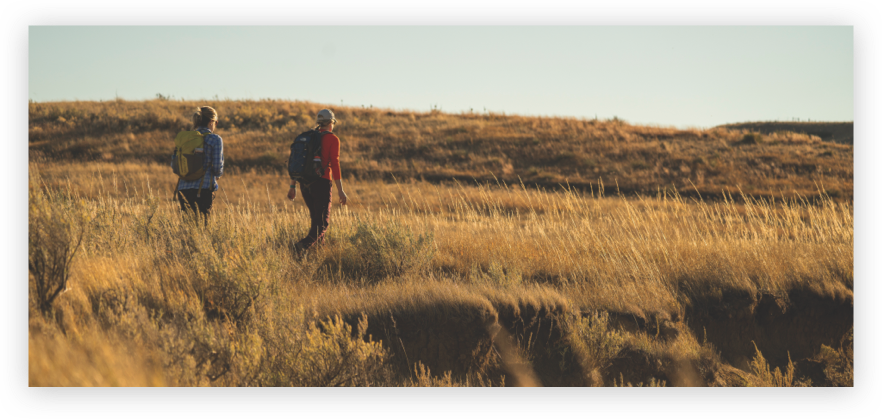
Saboe hopes more people will come to see the prairie for themselves, an ecosystem she thinks is often overlooked for the loftier peaks and rugged interiors of the West. But there is something wild, remote and austere about the prairie, too, she insists, and over the years, American Prairie has worked hard to share the land and its stories with others — both locally, nationally, and internationally. In 2022, they opened the National Discovery Center in Lewiston, which features educational exhibits and programs. Their hut and campground system grants overnight or longer access to a diverse swath of iconic Montana landscape to explore, such as sagebrush steppe, riparian areas, rugged hills, and of course, the sweeping views of grasses rippling in the wind.
“The prairie is a place you should visit,” she encourages. “It’s not just a place you drive through or fly over. It’s teeming with life —all you have to do is look down at the beetles moving at your feet, the flowers blooming up out of the soil; look up at that never-ending sky; take a moment to sense what you’re smelling, seeing, feeling. The prairie is alive, and it offers us something different.”
“The prairie is a place you should visit,” she encourages. “It’s not just a place you drive through or fly over. It’s teeming with life —all you have to do is look down at the beetles moving at your feet, the flowers blooming up out of the soil; look up at that never-ending sky; take a moment to sense what you’re smelling, seeing, feeling. The prairie is alive, and it offers us something different.”